 Menu
Menu 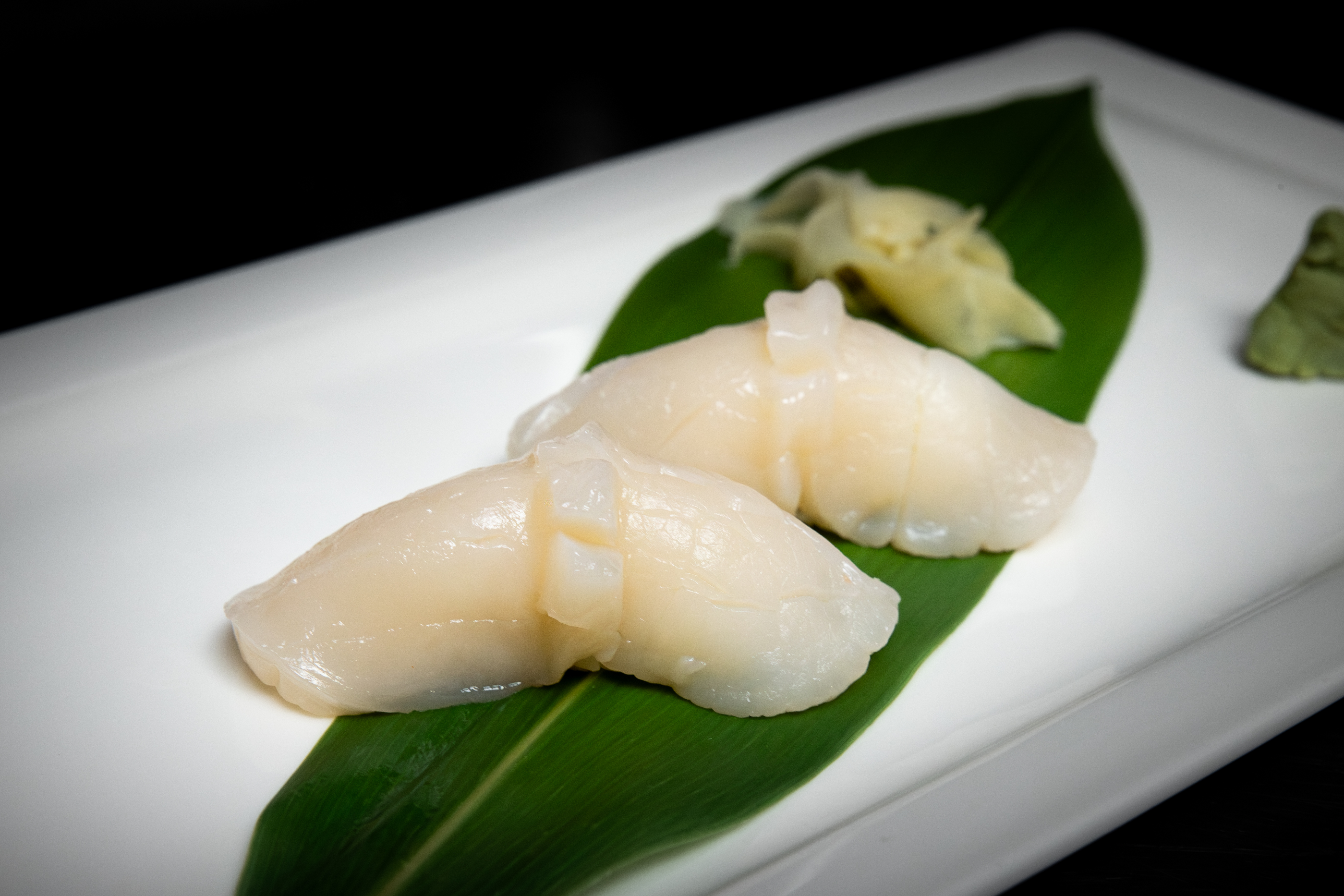
“Jumbo” is probably the least interesting thing about our Hokkaido scallop.
Yes, it’s big. But size isn’t why we bring it in.
The reason is freshness—and scallop is one of those ingredients that can completely change your idea of what “fresh” means.
Most of the Hokkaido scallops we see in the U.S. arrive frozen. That isn’t necessarily a bad thing. Modern freezing is excellent, and a good Hokkaido scallop can still be sweet, tender, and delicious after thawing. For a long time, we thought that was simply what a really good scallop tasted like.
Then we tried this one.
I still remember the first time I tasted it.
It had never been frozen and had been out of the water for only about 36 hours.
The difference wasn’t subtle.
The sweetness was brighter and more intense, but what surprised us even more was the texture: clean, firm, almost crisp when you bite into it, then tender as you chew. It had the kind of natural sweetness that makes adding very much to it feel unnecessary.
It changed the way I thought about scallop. And since we started serving it, we’ve seen plenty of customers have that same moment.
We’ve had scallops that were technically even fresher—including live scallops from Canada and Maine. They were excellent seafood, but they were different scallops, with a different flavor and texture. Freshness alone isn’t everything. The variety matters. Where it comes from matters. And for sushi, this particular Hokkaido scallop is still the one we keep coming back to.
That’s why it became a special at Oto.
Not because it looks impressive on the plate.
Not because “jumbo” sounds good on a menu.
We serve it because every once in a while, you find an ingredient that makes you stop after the first bite and think:
Oh. So this is what scallop can taste like.